
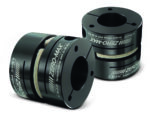
Wind Turbine couplings deliver 100,000 Nm of torque
January 31, 2011 by llangnau
Filed under Bellows, Flexible, Industry News
Zero-Max Wind Turbine Couplings are now available as an upgrade replacement for existing wind turbines and for OEM applications. These couplings easily handle torque spikes and high misalignment installations. They have composite disk packs at both ends of a center spacer for strength and generous flexibility. The composite disk packs (flex elements) allow a surplus of parallel and axial misalignment while remaining torsionally stiff through all harmonic ranges of the wind turbine’s oscillating load.
Depending on the application, the center spacers can be machined out of steel, composite glass fiber, or 6061-T6 aluminum. Through the use of Finite Element Analysis (FEA), these center spacers can be engineered to withstand in excess of 100,000 Nm of torque.
These wind turbine couplings have many additional design advantages. The flex elements electrically insulate the turbine’s generator from the gear box, eliminating stray electrical current that can leak across the coupling, thus preventing bearing damage to the gear box. The coupling protects the generator by transferring lower reaction loads to the generator bearings. Also, the coupling’s composite material withstands all types of environmental elements, including temperature extremes from -40 to +70° C, and also moisture and chemicals native to the nacelles of wind turbines.
Zero-Max
www.zero-max.com
Servo Couplings Use Dampening Attributes For Vibrations
August 10, 2010 by CouplingTips
Filed under Servo
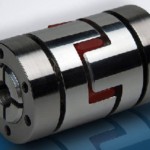
Specialist mechanical components supplier, Ondrives Ltd of Chesterfield, England have recently introduced a high quality range of servo-insert couplings into their extensive coupling range via their biggest ever catalogue, now that they have merged with sister company, Rino Industries Ltd.
Typically, they are used in applications where vibrations and crushes may appear. The dampening attributes of those couplings are caused by the spider element which is positioned between the two hubs. This spider element is available in different shore hardnesses. Depending on the requirements it is recommended customers use a spider element with low dampening properties for applications with low vibrations and crushes (higher torsional stiffness of the coupling) and to use a spider element with high dampening properties for application of high grades of vibrations or crushes (lower torsional stiffness of the coupling).
A further positive property of the servo insert couplings is that they are pluggable, so they can be assembled quickly and easily even under difficult assembly conditions. The many different varieties of the hub style include shaft fixing with set screws, with clamp hubs and with outer conical hubs. Customers will find that the most popular type, as always, is with the clamping hubs as they ensure the fastest assembly/disassembly without leaving marks on the shafts. Torque range varies from as low as 1.2Nm up to 940Nm on the largest sizes. Other advantages include an extremely compact design and minimum mass and inertia as standard. They offer high resistance against environmental influences and temperatures as well as being non-wearing and therefore maintenance free.
A misalignment of the shafts in axial, lateral and angular directions can be compensated by a servo insert coupling as well but it should only be a minimum of misalignment because relatively high reset forces are caused by the coupling which do negatively influence the lifetime of components such as bearings in this environment, the company states.
Typical applications include -
Stepping motors, servo drives, machine tools, CNC machines, wood working and packaging machines, factory automation machinery, printing machines, sheet metal forming machines, industrial robots, textile machines and control and feedback control systems.
Low Inertia Aluminum Couplings Reduce Cycle Time
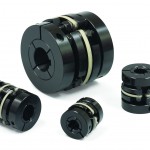
The aluminum CD® model is a low inertia, lightweight coupling with high torsional stiffness for servo motor applications. It is available in single and double flex versions.
“We surveyed design engineers to find out what was the most desirable feature when specifying couplings for servo motor applications,” reports Robert Mainz, Zero-Max sales manager. “Low inertia was the most important.” These engineers said they continually look for ways to reduce cycle time and improve system productivity. A lightweight yet high strength coupling design will let you increase the speed of the actuator. Lightweight couplings will also have an effect on the energy consumption in their designs.
The working part of the CD® coupling is made of a special composite material. The composite disc design withstands the stresses of a servomotor’s high acceleration rates and high torque capacity better than other coupling designs. This results in lower energy requirements, and longer life of the motor and other operating components while ensuring uninterrupted system operation.
Zero-Max CD couplings are available in single and double flex models with or without keyways. The double-flex version is for precision applications requiring misalignment capacity greater than the single flex design. The single flex models have a torque capacity range from 40 Nm to 1436 Nm and beyond with speed ratings from 4400 RPM to 17,000 RPM.
Zero-Max
www.zero-max.com
Floating Shaft Couplings Span Long Distances
January 27, 2010 by CouplingTips
Filed under Uncategorized
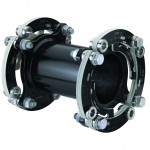
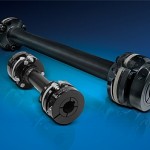
Floating Shaft CD® Couplings are a torsionally stiff, no backlash option for connecting long distances between shaft ends. They can often be a zero-backlash alternative to Cardan Shafts. The flex element made of composite material makes it possible to have zero-backlash, high torsional stiffness and low bearing loads simultaneously.
The composite material is flexible in one plane and stiff in another plane. It is not prone to fatigue and will perform longer than stainless steel. Custom designs are available with torque ranges from 270 in.-lbs (30 Nm) to 550,000 in.-lbs (63,000 Nm) and with speed ranges from 500 rpm to 15,000 rpm. They are available in custom lengths from 46 in. to 196 in. and with outside hub diameters of 2.25 to 12 in.
How to Properly Choose Servo Couplings
November 2, 2009 by CouplingTips
Filed under Servo
R+W Coupling Technology recently proposed a system on how to properly select your servo couplings. They state that servo systems require mechanical components with high torsional stiffness in order to perform properly in applications requiring rapid acceleration and deceleration of high inertia loads. Flexible couplings usually have the lowest torsional stiffness of any component in a motion system. Couplings are often selected based on factors other than torsional stiffness, often to the detriment of system performance. Proper servo coupling selection can pay off when considering the overall picture.
R+W also say engineers go to great lengths to ensure that inertia mismatch between the load and the servo motor is compensated for. Motors and gearheads must be selected in order to ensure the ability of the drive to be able to accelerate the load with ease. The mechanical connection between the drive and the load can however unvaryingly compromise the efforts of the drive system. The most compliant component in the mechanical system (e.g. the coupling) will be twisted back and forth by the settling motion of the load at any major velocity change. The formula provided by R+W for calculating torsional deflection based on load and stiffness is as follows:
![]() |
f | = | torsional deflection (degrees) |
| TAS | = | peak torque (Nm) | |
| CT | = | torsional stiffness of coupling (Nm/rad) |
Depending on the inertia of the load and its effect on peak torque, this can happen to varying degrees. In any case, more power is required in order to accelerate the load at the desired rate when a less rigid component is installed between the drive and the load. According to R+W, this may or may not pose a concern depending on the application, and tends to be of higher importance in cases with a high inertia load that must be rapidly indexed.
When tuning servo drives, R+W claims that velocity and position feedback loops must be set to a low enough frequency so as not to excite the most torsionally compliant component in the system by reaching its natural frequency. Higher coupling stiffness leads to a higher natural frequency of the entire system, which means that feedback loops can be set to a higher frequency. This leads to a faster moving, more accurate machine, and ultimately higher throughput and higher quality.
A commonly used calculation by R+W for determining required coupling stiffness, and / or maximum drive frequency, utilizes what is called the “two-mass system.” In practice, if the calculation is carried out based on coupling stiffness alone, the calculated resonant frequency of the load has to be at least twice as high as the excitation frequency of the drive.

![]() |
fe | = | Resonant frequency of the system (Hz) |
| CT | = | torsional stiffness of coupling (Nm/rad) | |
| JL | = | Moment of inertia, load (kgm^2) | |
| JA | = | Moment of inertia, drive (kgm^2) |
Bellows couplings quite simply posses the highest torsional stiffness of commercially available flexible couplings, and are considered by many to be the standard for servo applications. Hydroformed from a continuous tube of stainless steel, bellows can easily flex laterally, angularly, and axially with only very gentle restoring forces, while remaining highly rigid in rotation. This, paired with a low moment of inertia, according to R+W, makes bellows couplings appropriate for almost any application requiring optimum efficiency and performance in acceleration and positioning.
The exception lies, says R+W, in cases where neither a high level of dynamic positioning accuracy, nor the ability to optimize servo loop gains is critical. A vibration damping coupling can be a very dependable and a low cost alternative in these cases. When pushing the limits of efficiency, accuracy, and speed, the most torsionally rigid coupling possible should be used in order to design the best servo system possible.


