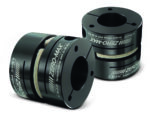
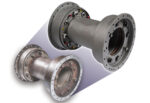
VULKAN Couplings unveils the VULKARDAN G 84
October 4, 2011 by  
Filed under Flexible, Industry News

VULKAN Couplings (www.vulkan.com) is all geared to launch the VULKARDAN G 84 Couplings at the Koremarine in Busan on 26 to 29 October 2011. Specifically designed for electric motors and generator drives in the medium power range, VULKARDAN G 84 supplements the company’s VULKARDAN G product range, which has been released for marine drive components to cater for a higher torque range of up to 63 kNm.

Developed for generator applications and modern auxiliary drives, the flexible VULKARDAN G series feature couplings in sizes ranging from 54 to 62 with a 25 kNm nominal torque. These couplings were developed for free-standing systems and allow the elastomer to be extended without fear of displacing the connected units. With the offered torsional stiffness, the system’s torsional vibration is optimized, limiting damaging resonances in the operating speed and preventing impact on the motor control.

The VULKARDAN G 84 enables the membrane to absorb the axial vibration produced during the engine’s operation, freeing the connected generator from axial vibrations and providing a positive effect on the generator bearing’s service life.

VULKARDAN G 84

Putting emphasis on backlash-free torque transmission, the VULKARDAN G 84 with up to 63 kNm nominal torque has been introduced in response to the growing demand for economic generator couplings. It is suitable for non-SAE motors that feature rated power ranging between 3,000 kW and 4,500 kW. This result to proper transmission characteristics considering the controller stability offered when the VULKARDAN G 84 is loaded or unloaded. Moreover, the VULKARDAN G 84 features a coupling design that highly protects the system from overload. Its linear torsional stiffness allows safe design of the coupling based on the defined stiffness.

Miniature couplings for medical applications
August 16, 2011 by  
Filed under Rigid

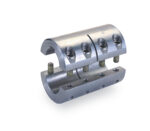
These miniature rigid couplings handle a variety of medical device applications, including test and measurement systems, imaging, patient positioning, and liquid handling such as chromatography.

Ruland rigid coupling 300x262 Rigid couplings are zero-backlash, torsionally stiff, and have high torque capacity. They should be used when shaft misalignment is neither present nor desired, with the rigid coupling often used to help establish the alignment. These couplings feature precision honed bores on straight bore couplings for improved fit and straightness as well as Nypatch treated hardware that resists loosening in vibratory conditions. Rigid couplings with bore sizes as small as 3 mm are available in carbon steel, high grade aluminum for low inertia and 303 stainless steel.

These couplings are RoHS and REACH compliant.

Ruland Manufacturing Co., Inc.
www.ruland.com


Maintenance free couplings for heavy engineering
August 16, 2011 by  
Filed under Bellows

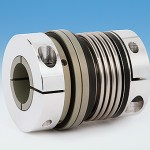
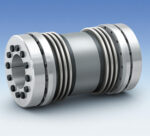
Extreme temperature ranges, high pollution levels, high vibration levels, and 24/7/365 operation call for engineered drive components which can take the abuse. Extending component maintenance intervals is a priority, since industrial gearboxes, electric motors, bearings, and drive shafts typically require at least partial disassembly and replacement of wear parts. A new solution involves zero maintenance, stainless steel bellows couplings for up to 100,000 Nm, engineered to run smoothly for decades.

BX6.vers2

One challenge in the development of the BX series was the design of the metal bellows itself. The bellows serves to alleviate misalignment loading between adjacent bearing sets while transmitting rotary power. Traditional sizing calculations were used at first, having proved successful for high speed servo drive systems, which tend to be some of the most demanding of the customary applications for bellows couplings. After a short time it became clear that a widely marketable high torque bellows coupling could not be designed without FEA, as the first installed models were two to three times larger than the final product design. As life testing later confirmed, the software revealed some errors in the initial interpretation of the sizing, demonstrating that the traditional methods did not scale properly. In collaboration with a major bellows hydroformer, R+W reviewed and updated these traditional bellows sizing methods to better reflect the realities of what the formed bellows can tolerate in this physical size range.

A special welded joint between the bellows, intermediate tubing, and mounting flanges was also selected, involving a combination of TIG (perfect root) and MAG (low heat generation). This welding method is a recent development of RWTH Aachen University IME, a world renowned leader in mechanical and electrical engineering research, and has demonstrated superior fatigue characteristics in vibration and life testing. With these two important features in place, hubs, flanges, and intermediate tubing, fabricated from high strength steel, were configured to round off the complete product line. R+W has been able to launch the all new “BX” series, with a variety of standard and custom mounting options available, and presently broken down into three specific series.

BX1 with Flange Mounting

The BX1 is the basic model from which the complete BX series is configured. Mounting flanges are welded directly to the bellows, which are then used for adaptation to shaft mounting systems in the cases of the BX4 and BX6. Power is therefore transmitted through the BX1 by means of a frictional flange connection. A common misconception is that the torque is transmitted through the bolts themselves. This can have two negative consequences in that the coupling would exhibit backlash, and that ultimately the bolts would fatigue and fracture. In case of reversing applications or those with frequent load variation this failure would occur within a very short amount of time. Basically torque ratings of flanges are calculated based on the pressure generated by the bolt circle arrangement, the diameter into which they have been arranged, and the coefficient of friction of the flange surfaces. A number of safety and application factors are normally added to ensure a pure high-pressure frictional connection results.

BX4 with Keyway Mounting

The BX4 is described as a low backlash coupling, which transmits torque purely though the form fit of a shaft key or spline. Some potential for backlash always exists due to the clearance required to fit the hub over the shaft. However reduced, this is even in the case of an interference fit, and especially in cases where only set screws are used for the axial retention of the hub. The main advantage of a keyway connection is the quick and easy installation and removal of the coupling hubs. In lieu of keyway connections, spline connections provide additional security and surface area contact with superior stress distribution characteristics. In consideration of some extra cost, this can be a good solution for a more compact design, as the necessary shaft engagement length can then be reduced. Generally speaking, the BX4 is well suited to unidirectional drive applications, which must accelerate, even to high speeds, and maintain those speeds for prolonged periods. Drive systems with shock loading, reversals, and high duty cycles are better served by the BX1 and BX6 designs.

BX6 with Conical Clamping Ring

The BX6 makes use of a high pressure, keyless, frictional clamping connection. The conical clamping ring system consists of two components: the clamping ring and the hub. The clamping ring is drawn over a slotted tapered section of the hub by means of a set of fastening bolts. Sliding the two tapered surfaces against one another creates a high level of surface pressure in the vertical direction, compressing onto the cylindrical shaft. The resulting contact force eliminates the need for keyways and is suitable for transmitting extremely high torque levels depending on the diameter of the shaft. Since the BX6 has many planes of symmetry across its length, it is also well suited to very high rotational speeds, as a result of the low residual imbalance.

Variable Length with Internal Support

The intermediate section of the BX series consists of high strength steel tubing with adapter flanges common to the full product line. The length of the intermediate tubing section can be specified according to customer requirements and interchanged for machinery modifications as needed. The adapter flanges are made with a gimbal system which extends through the inside of the bellows and engages a concave receptacle on the opposite side. This support system causes the entire mass of the intermediate section to be carried by the shafting rather than the flexible bellows. It also serves as a safety feature in the event of a machine crash. Should the bellows or its connection be caused to fail by extreme overload, the tubing would still not be allowed to escape from the hubs, eliminating the need for coupling guards in some cases. This safety feature does not exist in flex disc or universal drive shaft products.

Summary and Outlook

The all new “BX” series offers standard torque ratings of up to 100,000 Nm and bore diameters of up to 280 mm. This technology provides a viable alternative to steel disc couplings, with improved torsional stiffness, balance, and safety features. Flexible design configurations allow for the BX to be made to suit applications with specialized flanges, hubs, materials and surface treatments for even the harshest of environments. The internal support system provides for a high degree of security unavailable in other similar types of couplings. The symmetrical design of the series BX1 and BX6 allows for an optimal balance quality in highly dynamic drive systems and test stands, with ISO Grade 2.5 certification available upon request.

The principle of the formed metal bellows as an equalizing element offers many unique performance advantages for today’s advanced drive technology. Designs capable of transmitting up to 2,000,000 Nm are currently in development.

R+W America
www.rw-america.com


Oldham couplings: Not just for motion control applications
May 13, 2011 by  
Filed under Oldham

Oldham couplings are typically used in motion control applications where zero-backlash performance is required. However, these couplings are increasingly used as an alternative to straight jaw couplings on general industrial equipment such as pumps, valves, gearboxes, and conveyor systems due to their versatility, ease of assembly, and extended life if misalignment is present.

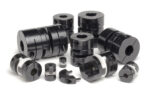
The oldham coupling is a three-piece assembly comprised of two anodized aluminum hubs and a torque transmitting center disk. This design results in a custom shaft coupling which can easily interchange inch to metric, different bore dimensions, and keyed shafts. The center disc is available in acetal plastic for high torsional stiffness and zero-backlash, or nylon for shock absorption and noise reduction. Ruland offers numerous standard bore combinations from 1/8 in. (3 mm) to 1 in. (30 mm) with hubs also available in stainless steel.

Ruland oldham couplings 300x198

Oldham couplings from Ruland in different sizes and center disc materials.

Industrial equipment manufacturers can benefit from oldham couplings in place of straight jaw couplings thanks to their ability to accommodate parallel misalignment, act as a mechanical fuse, and be electrically isolating. These key features promote a very light bearing load, stop transmission of power during overload, and minimize damage to more expensive machinery components. The three-piece design of the oldham coupling makes installation easy. Blind assembly can be achieved by independently installing the hubs and mating their drive tenons to the slots on the center disc.

Oldham couplings are part of Ruland’s complete product line which includes shaft collars, rigid couplings and five types of zero-backlash motion control couplings: beam couplings, bellows couplings, oldham couplings, disc couplings, and curved jaw couplings.

Ruland Manufacturing Co., Inc.
www.ruland.com/ps_couplings_oldham.asp

VULKAN Couplings unveils New Integrated Shaft Coupling Design
May 4, 2011 by  
Filed under Featured, Industry News, Rigid

VULKAN Couplings (www.vulkan.com) has unveiled a new innovation of the Rato DS coupling that is directly connected to a composite shaft.

VULKAN Couplings New Integrated Shaft Coupling Design

Aside from being a torsional coupling, the combination of high radial stiffness and low bending and axial stiffness makes the Rato DS ideal to work as an integrated misalignment coupling when it is rigidly connected to an intermediate shaft. A torsionally stiff misalignment coupling at the intermediate shaft’s rear end creates the second bending flexible pivot, which offers a double cardanic design. This unique combination of the intermediate shaft and the Rato DS is known as the VULKAN Integrated Shaft Coupling (ISC).

Even at high misalignment levels, the angular deflection of the Rato DS causes a minimal level of strain against the torque load, which results to a lower power loss. Thus, it effectively eliminates the need for a misalignment coupling between the shaft and Rato DS. The intermediate shaft can be connected directly to the coupling’s inner ring where the Rato DS is not radially supported.

The new ISC design’s advantages include the major reduction of parts, less design of the bearing and lighter weight, which leads to reduced alignment and installation efforts. The new design of the ISC also has no noise transmission path over bearing or metallic parts between the engine and gearbox. The Rato DS rubber element of the assembly provides outstanding sound isolation against structure borne noise.

Depending on the speed of the shaft the ISC design based on RATO DS can be offered with composite shafts to a maximum length of 7 m. All RATO DS coupling elements whether dual couplings or single row couplings can be utilized for the ISC design.

Flex element insulates couplings and protects from reaction loads
March 25, 2011 by  
Filed under Industry News, Uncategorized

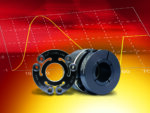
Motion system designers have a new option to arrest electrical current. Zero-Max CD® couplings have composite flex elements that are non-conductive in addition to their primary function.

5940 Zero Max Cd Coup9660 300x225

In addition to protecting from stray electrical current, CD couplings protect generators in a system from transferring lower reaction loads to the generator bearings. The coupling’s composite discs withstand all types of environmental elements, including temperature extremes from -40 to +70° C, and also moisture and chemicals.

Additional operating features include: zero backlash, excellent for reversing loads, smooth operation at high speeds, and compact size with a clamping system that fits most applications. CD couplings have long life cycles and require less replacement over time.

CD couplings are available in many models and sizes, including custom designs for unusually large and challenging applications such as wind turbines. Standard models and sizes include single and double flex models with clamp style hubs with or without keyways. The torque capacities range from 40 Nm to 1436 Nm and beyond with speed ratings from 4400 RPM to 17,000 RPM.

Zero-Max
www.zero-max.com

Wind Turbine couplings deliver 100,000 Nm of torque
January 31, 2011 by  
Filed under Bellows, Flexible, Industry News

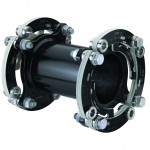
Zero-Max Wind Turbine Couplings are now available as an upgrade replacement for existing wind turbines and for OEM applications. These couplings easily handle torque spikes and high misalignment installations. They have composite disk packs at both ends of a center spacer for strength and generous flexibility. The composite disk packs (flex elements) allow a surplus of parallel and axial misalignment while remaining torsionally stiff through all harmonic ranges of the wind turbine’s oscillating load.

5914 Zero Max Photo 01 300x248

Depending on the application, the center spacers can be machined out of steel, composite glass fiber, or 6061-T6 aluminum. Through the use of Finite Element Analysis (FEA), these center spacers can be engineered to withstand in excess of 100,000 Nm of torque.

These wind turbine couplings have many additional design advantages. The flex elements electrically insulate the turbine’s generator from the gear box, eliminating stray electrical current that can leak across the coupling, thus preventing bearing damage to the gear box. The coupling protects the generator by transferring lower reaction loads to the generator bearings. Also, the coupling’s composite material withstands all types of environmental elements, including temperature extremes from -40 to +70° C, and also moisture and chemicals native to the nacelles of wind turbines.

Zero-Max
www.zero-max.com

Compact safety coupling

January 19, 2011 by  
Filed under Bellows, Industry News, Safety

Making use of the existing BKC line of compact bellows couplings, the SL2 safety coupling is a compact, flexible and torsionally rigid option with integral torque overload release.  Designed for aggressive servo driven applications, it  is completely backlash free, relying on preloads and frictional connections, along with a hydroformed stainless steel bellows to relieve bearing loads resulting from misalignment.

R+W America SL2 coupling

In the event of a machine crash, power surge, or any other cause of unanticipated overload, the SL2 will disengage the motor or gearbox shaft from the load in less than 3 milliseconds.  Re-engagement takes place automatically with slow speed rotation of the shaft subsequent to the overload occurrence.  Available in four sizes, it handles a range of disengagement torque values from 5 to 400 Nm, and English or metric shaft diameters from 12 to 60 mm.

R+W America L.P.
www.rw-america.com

Stainless Steel Couplings Deliver Non-Spill Connections

October 4, 2010 by  
Filed under Flexible, Industry News

The FD89 – 2000 Series couplings meet ISO 16028 dimensional requirements. These stainless steel quick-disconnect/non-spill couplings feature standard anti-extrusion Teflon® seals and Viton® O-rings.

 FD89 2000 Series

“FD89 couplings provide a globally interchangeable solution for a variety of applications that require both corrosion resistance and long product life,” explained Joseph E. Dzierwa, Eaton product manager, connectors.  “They’re machined from 316 stainless steel and conform dimensionally to ISO 16028, which is found in applications including snow plows, marine systems, on and offshore oil and gas rigs, chemical processing operations, clean rooms, and pharmaceutical manufacturing systems.”

The couplings are available in sizes -04, -06, -08, -10, -12, -16, -24, and -32 (1/4 in. to 2.0 in. – ISO 6.3, 10.0, 12.5, 16.0, 19.0, 25.0, 27.0, 31.5, and 40.0) with operating pressure ratings ranging from 150 to 350 bar (2,175 to 5,075 psi) depending on size. Fluid loss per connection ranges from 0.006 cc to 0.100 cc, again depending on size.

Eaton’s Hydraulics Group
www.eaton.com/hydraulics

Zero Maintenance Bearings– New Option For Schmidt Offset Couplings

August 26, 2010 by  
Filed under Industry News

Zero maintenance bearings are now available as an option for Schmidt Offset couplings from Zero-Max. This new coupling feature eliminates periodic coupling lubrication and the resulting system downtime.

Schmidt Offset couplings deliver precision for parallel offset shafts. They transmit constant angular velocity and torque in a range of parallel shaft misalignments. They are used in a range of machine applications including printing, embossing, paper converting, pharmaceutical, and automated assembly systems.

The new Schmidt sealed bearing coupling feature incorporates needle bearings with internal micro-poly lubrication. There are no lube fittings making for a cleaner coupling setup. Compact in design, Schmidt Offset couplings with the new zero maintenance bearing option keep out contaminants and foreign matter, enabling the couplings to be used in less than ideal operating environments.

5801 Zero Max Schmidt8A17 300x213

Schmidt Offset couplings are designed to handle high amounts of parallel offset up to 17 in. and are available with torque capacities up to 459,000 in.-lbs. They impose no side loads on shafts or bearings and eliminate radial shaft vibrations.

Zero-Max
www.zero-max.com

Next Page »